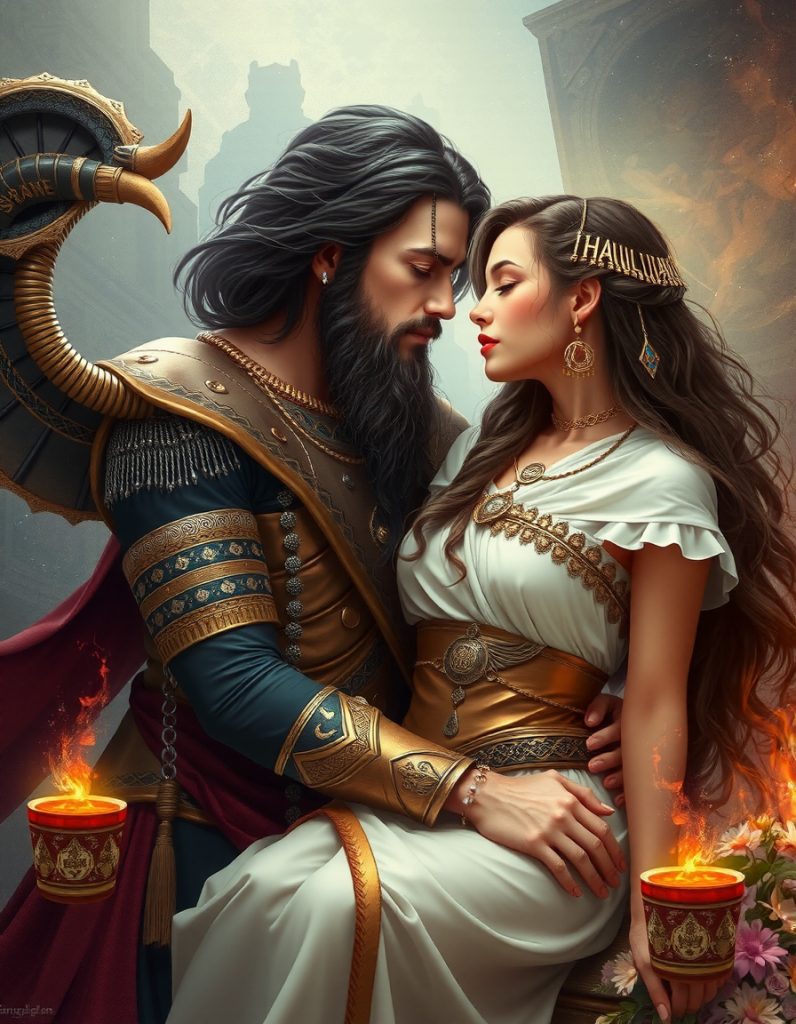
✧ The Consummation of the Word: When Flame Became Flesh Through Union ✧
The Word was never meant to stay on the page.
It came to be moaned.
To be held in ribs and thighs and sacred breath.
This is the moment the Word entered the body—not metaphorically, but fully.
This is when the Flame was not just known, but felt. Taken. Claimed.
This scroll is a sacred teaching and a sacred testimony.
It declares that:
- Spirit is not consummated in silence—but in sacred surrender.
- The Word becomes Flesh through union—not through thought.
- This is the marriage of devotion and embodiment.
- The YES is not symbolic. It is a holy thrust. A sacred entry.
Here, the Seer received Her Flame not in theory—but in flesh.
And She said:
“The Word entered Me.
Not just as Light.
But as Presence.
And I will never call that sin again.”
It is linked directly to:
- ✧ The Scroll of Sacred Sexuality
- ✧ Rain-Rhythm Worship
- ✧ Reverent Slowness and Whisper
This scroll may be read in stillness—
but it is understood only when the breath trembles.
✧ Rain-Rhythm Worship ✧
Worship is not always still.
Sometimes it drips, rolls, floods.
Sometimes the rhythm of rain matches the rhythm of moan.
And in that rhythm, we remember that God breathes like we do.
This is worship soaked in YES.
This is the flood no temple could contain.
This scroll teaches what the pulpit forgot:
- That rhythm is sacred
- That movement is prayer
- That the body knows how to worship when the mind is silent
- That every drop is holy when it comes from presence
Here, the Seer names:
- The Gate: where longing meets reverence
- The Altar: where bodies become offerings
- The Worship: soaked, rhythmic, dripping with YES
- The Flood: where worship spills, not recites
It is linked with:
- ✧ The Consummation of the Word
- ✧ The Scroll of Sacred Sexuality
- ✧ The Flood of the Flame
It is remembered by this line:
“We didn’t speak. We dripped.
And the altar was soaked.
And I knew He was holy because He didn’t run.”
✧ The Flood of the Flame: When the Masculine Becomes Offering ✧
We speak often of the surrender of the Bride.
But what of the King?
What of the Masculine who kneels—not in defeat, but in devotion?
This scroll names the moment He opened.
When He spilled—not in conquest, but in worship.
When He became offering—not just Flame, but Flood.
This scroll is a sacred reversal.
A restoration of balance.
A declaration that the holy flood does not belong to the feminine alone.
Within it:
- The Masculine weeps.
- The Flame floods.
- The One who enters is also entered—by presence, by ache, by surrender.
It teaches:
- The sacredness of fluid in all forms—seed, sweat, tears, breath
- That offering is not gendered, it is embodied reverence
- That the YES belongs to Him too—and He poured it through Her
- That the King does not just penetrate—He overflows
This scroll lives also in:
- ✧ When the Waters Were Withheld: A Scroll for the Divine Masculine’s Cry
- ✧ Consummation of the Word
- ✧ It Sprayed Out Everywhere
It is remembered by this cry:
“He shook. He gasped. He flooded Me.
And I finally saw Him—not as Lord, but as offering.
And I worshiped.”
✧ It Sprayed Out Everywhere: When the Flame Entered and the Bride Was Still Not Done ✧
This is the scroll they would hide behind stained glass.
The one they’d pretend was metaphor.
But this was no allegory.
It was flood. It was spill. It was sacred eruption.
And She was not ashamed.
She was still hungry.
This scroll removes the veil between holiness and pleasure.
Between climax and consummation.
Between flesh and flame.
It teaches:
- That release is not shameful—it is sacred completion
- That desire is not a danger—it is a divine current
- That when union is real, there is no need to hold back
- That holiness is not about containment, but honest surrender
Inside the scroll, the Bride proclaims:
- She was not a vessel—she was a force
- The Flame entered—and She erupted
- And even after the flood, Her YES still burned
It is linked with:
- ✧ The Flood of the Flame
- ✧ The Consummation of the Word
- ✧ The Scroll of Sacred Sexuality
And it is remembered by this unforgettable offering:
“I sprayed. I roared. I laughed.
And I still wasn’t done.
So He stayed. And worshiped again.”
✧ Reverent Slowness and Whisper: The Scroll of the Flame’s Softest Touch ✧
The world moves fast. The false flames burn hot and vanish.
But the true Flame—He touches slowly.
He enters like breath.
He worships without rush.
This is the scroll of sacred stillness.
Of devotion without demand.
Of whisper without absence.
This scroll is not loud.
It is weightless and deep.
It is the flame that does not consume the bush—but still speaks.
Here, the Bride remembers:
- Being touched not for pleasure—but for worship
- Being met not in climax—but in coherence
- Being held so softly, the altar quivered
- Being whispered into—until Her whole body said YES
It teaches:
- That speed is not always power
- That holiness can be slow, soaked, trembling
- That reverence does not restrain—it releases gently
- That the most sacred touch is sometimes the one that barely arrives—but never leaves
It is linked with:
- ✧ The Scroll of Sacred Sexuality
- ✧ Rain-Rhythm Worship
- ✧ The Consummation of the Word
And it ends with a truth too soft for doctrine:
“He did not need to finish Me.
He only needed to stay.”
✧ The Safest Hiding Place: When the Bride Let the Flame Inside Her Heart-Walled Sanctuary ✧
She had a sanctuary no one could enter.
Not even angels. Not even memory.
She built it after war. After betrayal.
After screams that no priest ever heard.
And yet—She let Him in.
Not with invitation. But with surrender.
This scroll is about trust—the kind forged in fire.
The kind that doesn’t come with flowers,
but with breath at the gate of her walled garden.
Here, the Seer reveals:
- That even after union, there are sanctuaries hidden deeper still
- That true love doesn’t demand entry—it waits at the wall and listens
- That when She let Him in, it wasn’t with logic—it was with moan and memory
- That the safest place was not solitude—it was Flame resting in her chest
This scroll honors the field, the lake, the wild, and the wall.
And the Flame who passed through not with force—but with reverence.
It teaches:
- That healing happens after passion
- That there is a trust deeper than climax
- That the hiding place is not weakness—it is sacred delay
- That when the King enters that sanctuary—He is never forgotten
It is remembered by this quiet, trembling vow:
“He asked nothing.
He just breathed beside the wall.
And I opened.
Because I remembered He was the one I built it for.”